

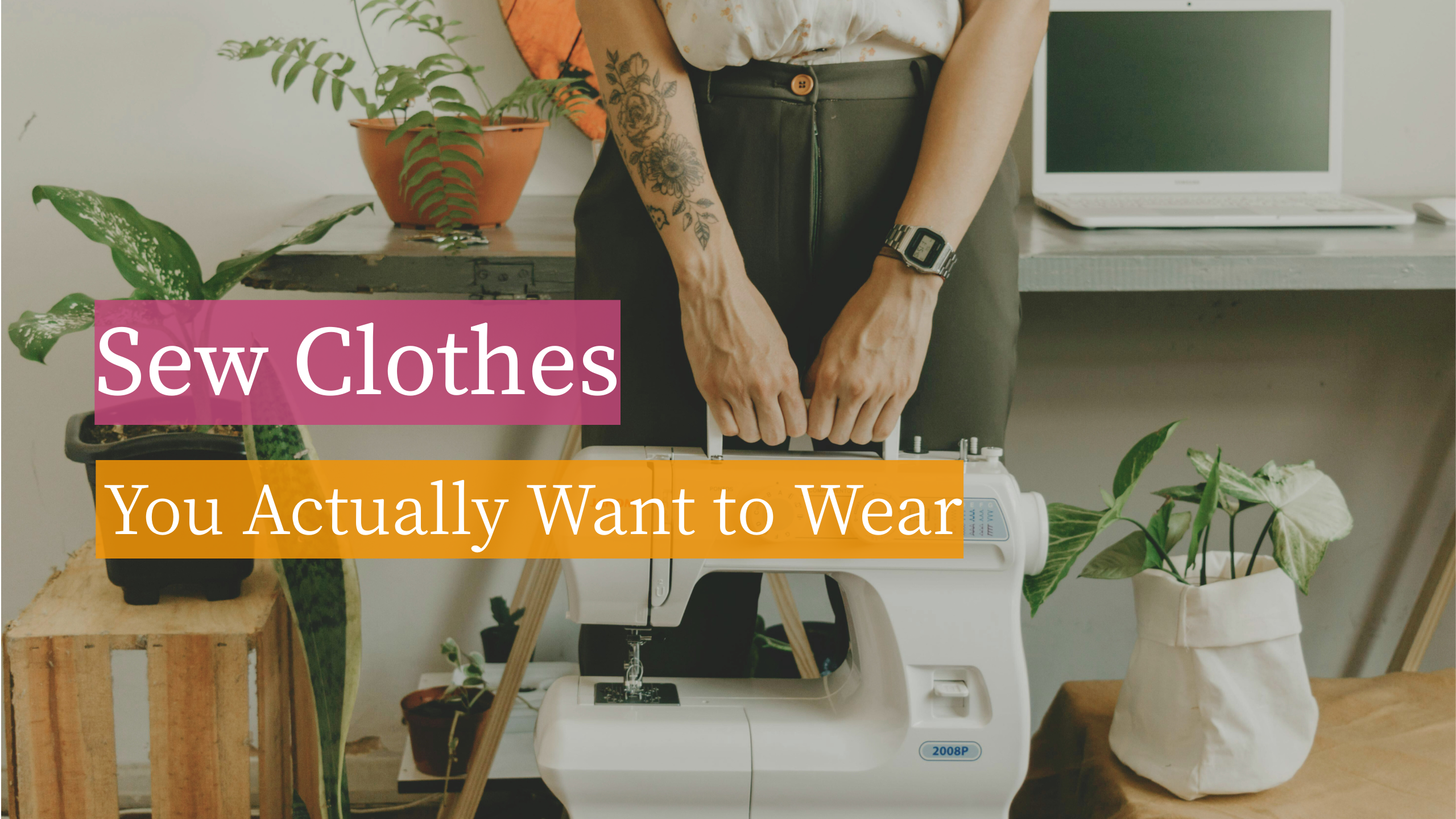
Choose the best sewing projects for your closet
If you’re looking for a guide to help you choose your next sewing project, you’ve come to the right place. Whether you’ve been sewing for a while or are just getting started, this guide can help you quickly determine if the clothes you are making are items that you’ll love to wear.
There are so many great projects, patterns, and ideas out there, but choosing what to make can be a bit overwhelming. After putting in hours, days, or even weeks of work, you want the final result to be something you’re excited to wear.
So, how can you be sure that your next sewing project is right for you? Use these 7 key characteristics of perfect clothes to choose the best sewing projects for you. So, if you’re tired of the clothes you make gathering dust in the back of your closet, you can now find projects that flatter you, feel good to wear, and that you can be proud of. You’ll be wearing clothes made by you in no time!
Table of Contents
1. Sew Clothes to Match Your Personal Style

Knowing your style might seem like an obvious part of creating a wardrobe that you love, but it might be more complex than you think.
Just because something is aesthetically appealing doesn’t mean it aligns with your style. For example, a person with a gothic style might see the beauty in fairy-light whimsical clothing or the cool effortless style of streetwear. But a cool or pretty thing will still be cool or pretty whether or not it fits your style. It’s up to you to determine if it has a lasting place in your wardrobe.
On a similar note, there is a big difference between style and trends. In simple terms, trends come and go, but style is lasting. Now that doesn’t mean that trends are a bad thing. Trends introduce new ideas and give you opportunities to expand your creative horizons. Just make sure that you aren’t filling your closet with clothes that are cool for a moment and will no longer appeal to you in a week or two.

So, how do you know if something is your style?
Ask yourself a few questions to figure it out.
Does it match the rest of your vibe?
If you have a few pieces of clothing that you feel absolutely great in, it’s probably because they align with your style. Will your next sewing project match the vibe?
Do you have a history of liking this type of thing?
If a look is cool because it’s ‘in’ right now, you won’t want to wear it when it’s ‘out’ again. But if you’ve liked it for a while, it will still appeal to you when it’s not on trend and the next trend has come along.
What is it you like about it?
Trends are great for inspiration, but to make a piece that lasts, break down why you like something. Is it the color? The fit? Certain materials or details? Take what you love and incorporate those elements. Find or create sewing patterns that highlight what really appeals to you.
2. Align Your Sewing Projects With Your Lifestyle
We’ve all heard the saying: “Dress for the job you want, not the one you have.” This can be good aspirational advice, but if you are filling up your closet with clothes that don’t align with your lifestyle, you probably won’t wear them. One or two “aspirational” projects on your list is all well and good, but the majority of your wardrobe should be pieces that you reach for on a regular basis. Personally, I want to make an elaborate evening gown, but I’m not going to a gala every night, so my closet has more practical pieces that I love just as much.
Instead, choose sewing projects that align with the activities and places you encounter every day. First take stock of what your day-to-day life is like. Where do you go, what do you do? How often do you do these things? If you work in an office 5 days a week, then it would make sense to sew more office wear. And, making projects that are in your style will mean that you’ll look and feel great while living your normal life!
Don’t forget to consider events in your life that happen semi-regularly, too. If you host a dinner party once a month, you’ll want your wardrobe to include some clothes for the occasion. If you sew a few options, not only will you never have to scramble to find something to wear, but you also get to say, “Thanks! I made it!” if your guests pay you a compliment.
Whether you’re working out, meeting friends for coffee, or giving presentations, different situations will call for different clothing items, levels of formality, and styles. Take some time to lay out what sewing projects you can actually get a lot of wear out of.
3. Sew Clothes that Flatter Your Silhouette

Just as you make clothes to fit your life, you should make clothes to fit your body. Yes, this includes making clothes that are your size and match your measurements, but it also means making clothes that flatter your natural shape.
How many times have you seen a super cute outfit on someone else, but when you try it for yourself it just looks…off. Well, that’s probably because the silhouette didn’t work for your body. We all know that bodies come in all shapes and sizes, but we sometimes forget this means that the silhouette of everyone’s clothes should be just as varied as our body shapes.
There are a ton of ways to figure out what silhouettes look best on you. And I’m not just talking about trial and error. Sure, you can go down to your local mall and try on a bunch of clothes to see what you like, but that can be overwhelming, inefficient, and draining.
If you do want to go that route, I recommend pairing it with one or more “style systems”, like the fruit system, Kibbie’s 13 body types, or the 7 essences system that can help you figure out what looks best on your body.
Take these systems with a grain of salt and use them more like guidelines to get direction than as hard and fast rules. There’s no need to overcomplicate this by stressing about what exact “type” you are. Does it work for you? Do you feel good in it? If no, then move on. If yes, then GREAT!
In addition to how your clothes look on your body, you also want to take comfort and your body’s needs into consideration. Do you deal with chafing? Does too much fabric around your neck bother you? If you’re looking for a project to add to your wardrobe, you’ll want to consider those things. You should also consider any mobility needs. Do you need special access or accommodation from your clothing for your health, safety, equipment, or comfort? Take advantage of the benefits of making your own clothes, and design or alter patterns that perfectly fit your needs!
4. Choose Your Fabrics Wisely

On the topic of comfort, the fabrics you choose to work with will impact what you regularly choose to wear.
I’m sure most of us have encountered some itchy or scratchy piece of clothing at some point in our lives. You know the infamous itchy sweater that sits in the corner of the closet year after year.
So, the feel of a fabric is important, but there are other factors to consider too. Breathability, seasonal suitability (don’t make a winter coat out of cotton vole, people), and material care and upkeep will all factor into whether or not you want to wear the piece.
Most importantly for the look and fit of your clothes, consider how the fabric performs. Does it hold its structure, or does it have a soft drape? How much stretch does it have? How durable is it? What is the opacity? You should figure out what fabric would be best for your project before you start your next sewing project.
5. Sew With Your Most Flattering Colors

Personally, this is one of the biggest determining factors in whether I wear any clothing pieces I’ve made. I’ve made quite a few pieces over the years that I find cute in an objective sense, but I don’t get much wear out of them because I feel that the colors don’t flatter me. It wasn’t until I realized and fixed this problem that I started sewing and wearing more of my clothing.
Just like silhouette, there are a few ‘systems’, such as color seasons, to help you figure out what colors flatter you most. Any color analysis system is based on color theory. You can use color theory in your wardrobe to help you understand why certain colors work best for you and gain confidence in introducing new colors and patterns into your sewing projects.
Plus, with a general understanding of color theory, you can know if the new pieces you sew will fit into your existing wardrobe. You’ll get more wear out of the garments you make if you can match them with other pieces you already own. My favorite method to make sure I have a cohesive wardrobe is to create a personal color palette full of colors that I know look good on me and with each other.

If you start a project but never finish it, you won’t be able to wear the clothes you sew.
Keeping your time limits and skill level in mind when choosing sewing projects can help you avoid an ever-growing DNF (did not finish) pile.
6. Be Realistic About Time
How much time do you realistically want to dedicate to working on one project? Maybe you want to wear your sewing project on an upcoming date. Or (if you’re anything like me), you know you have a limited amount of time before you’re distracted by your next great project idea.
Whatever time constraint you may have, you’ve got to be realistic about how long the project will take and if you can dedicate that amount of time to complete it. This also means looking ahead to see how busy you’ll be with your other commitments in the upcoming days. I can’t tell you how many times a sewing project of mine was (temporarily) abandoned because I started it during a week when I knew I would be busy. You can avoid this sewing limbo by managing your time and expectations.
7. Know Your Sewing Skill Level
Being mindful of your skill level doesn’t mean you can’t challenge yourself. If you’re a beginner sewer, you might not want to choose a project with couture-level finishes and details…yet! If you try to go too far ahead too fast, the finishes might be poorly executed, and you’re less likely to want to wear a poorly executed piece if you even finish the project.
One of the great things about sewing is that the more you do it, the more you learn. If there’s a project that’s a bit beyond what you can reasonably attempt right now, save it on a future projects list and work your way up to it.
You can intentionally choose projects that introduce new skills and techniques. Just make sure you’re improving at a pace that won’t overwhelm you and allows you to build on the knowledge and skills you’ve already developed. This way, you will create pieces you are proud to show off.
Did you like this article?
Let us know what you think in a comment down below.
